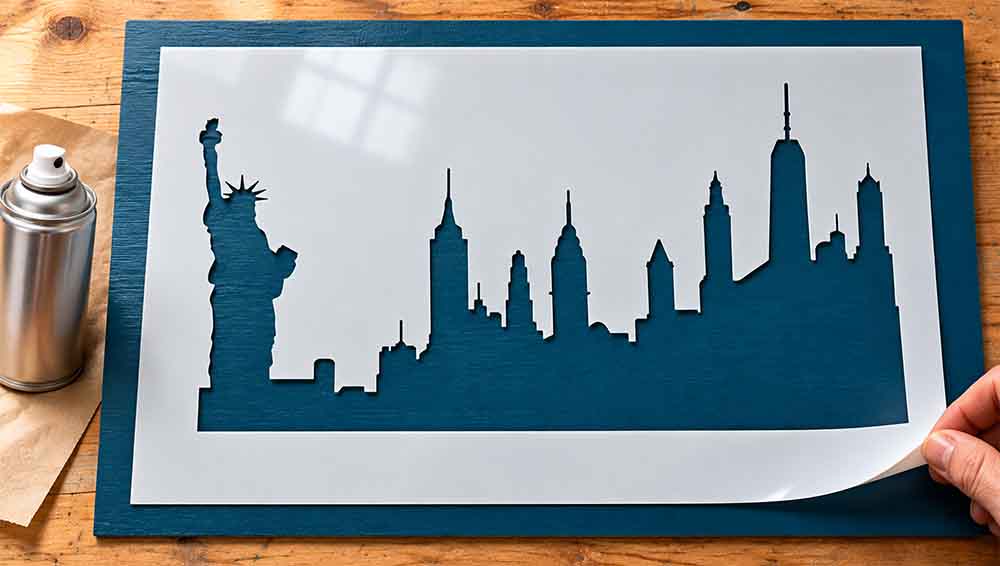
How to Prevent Overspray When Using Spray Paint Stencils
Ever lift a stencil and find a dusting of paint around your design? That fine mist is called overspray. If the outline itself looks blurry, paint may have slipped under the stencil. A little prep can help you avoid both problems.
1. Start with a clean, dry surface
Wipe away dust before you position the stencil. Even a small piece of grit can hold up an edge and leave a gap for paint to sneak through.
2. Secure the stencil
Lay your 10 mil Mylar stencil flat and tape the edges with painter’s tape. Check the small details in the middle, too. If a narrow piece keeps lifting, apply a light coat of repositionable stencil adhesive to the back. Follow the adhesive label and test it on scrap first.
3. Cover the area around the design
Tape paper or cardboard around all four sides of the stencil. Overlap the paper with the stencil border so there are no gaps. If you’re painting a wooden sign, cover the sides of the board as well. Spray mist can reach them even when you aim at the center.
4. Test the spray before you paint
Choose a well-ventilated spot sheltered from wind. Shake the can as directed and make a quick test pass on scrap. For many spray paints, 8–12 inches (20–30 cm) is a good starting distance. Follow the distance printed on your can.
5. Build the color with light coats
Aim the nozzle straight at the surface and keep the can moving. Spraying from the side can push paint under a cut edge. Your first coat should be light enough that you can still see the surface underneath. Add another light coat after the wait time listed on the can.
When you’re finished, lift the stencil carefully so it doesn’t drag across the fresh paint.
Quick fixes for common problems
- Paint speckles outside the design? Cover more of the surrounding surface and check for gaps in the masking paper.
- One blurry letter or shape? Check that part of the stencil for a lifted edge before your next pass.
- Paint pooling around the cutouts? Use a lighter pass and keep the can moving.
A little paint on top of the stencil is normal. That’s paint the stencil caught before it reached your project.